Consultant-delivered cosmetic care in Jersey
Cosmetic treatments
Personal, consultant-delivered care with clear information, appropriate assessment and no unrealistic promises.
Individual treatment based on anatomy
Understanding what creates the concern
The lines and movements you see are created by different facial and neck muscles. I assess your face both at rest and in movement, considering natural asymmetry, muscle strength, skin support, brow and eyelid position, your smile and your medical history before recommending anything.
I do not charge by “area” or “zone”. Fees reflect the individual assessment and the amount of treatment clinically appropriate for you. This avoids encouraging unnecessary treatment simply to fit a package.
How treatment works
Many of the concerns on this page are related to repeated or excessive muscle activity. Where treatment is clinically appropriate, it can temporarily reduce the release of acetylcholine from selected nerve endings. This reduces activity in the target muscle while preserving useful movement and expression. In unwanted perspiration, the same principle reduces signalling to eccrine sweat glands. See the below diagrams.
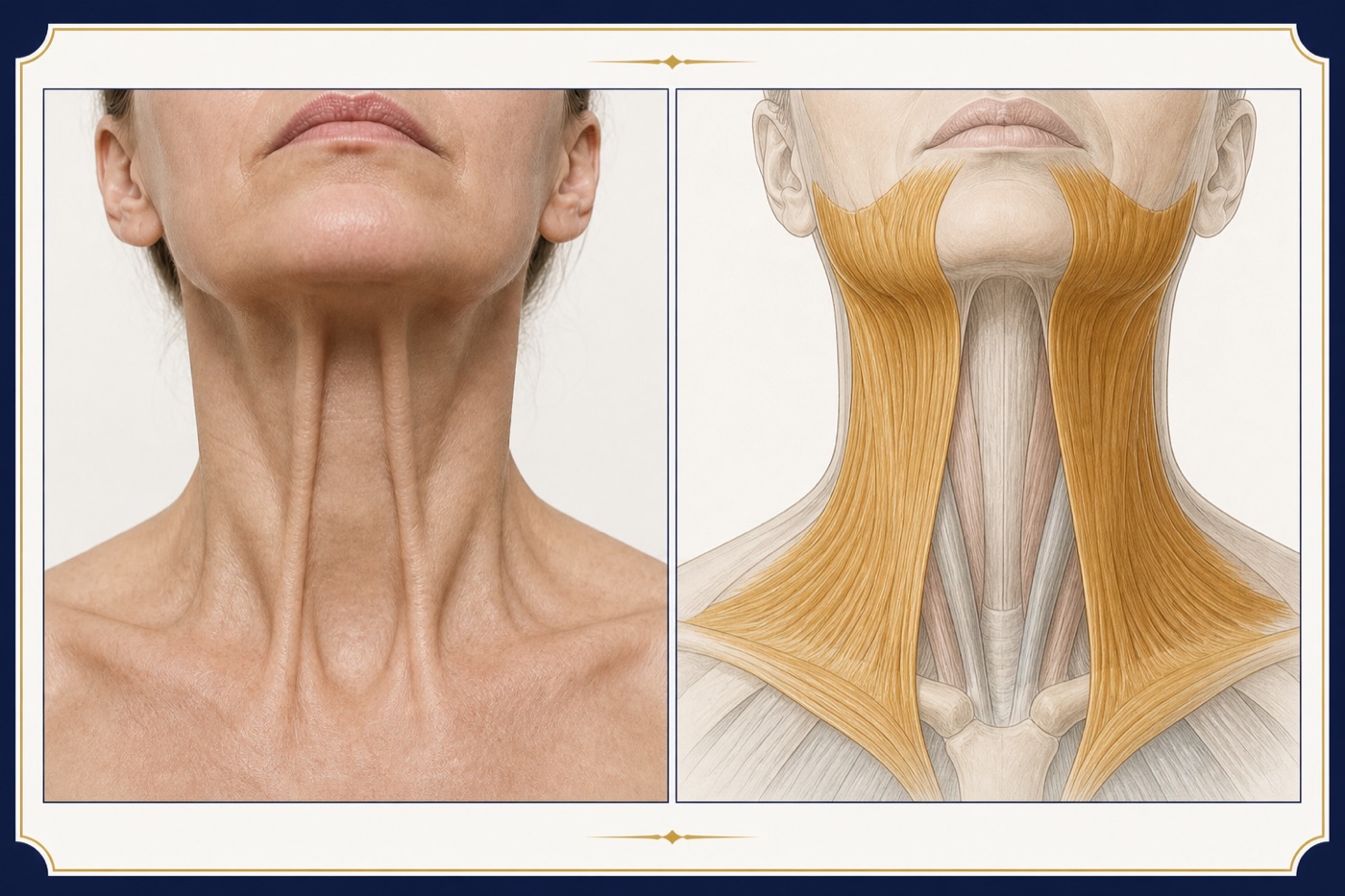
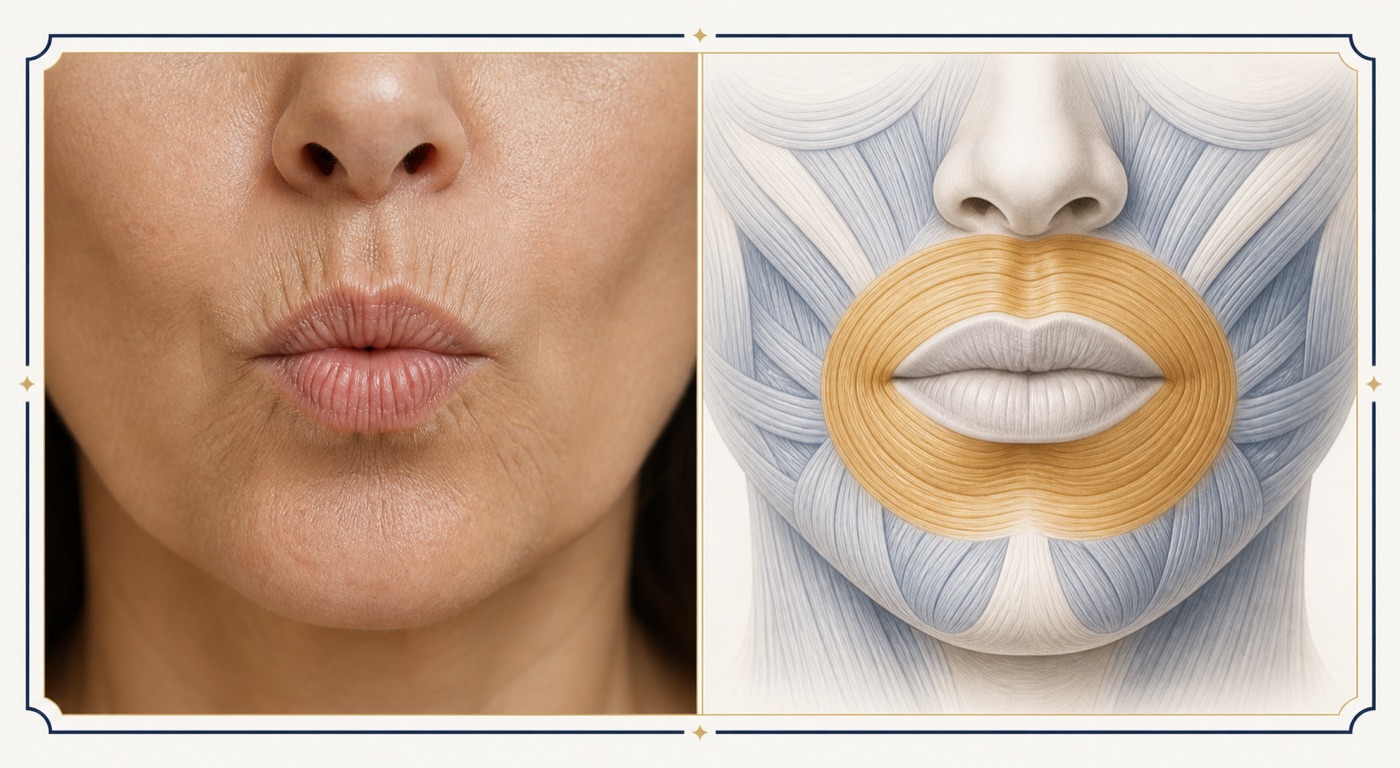
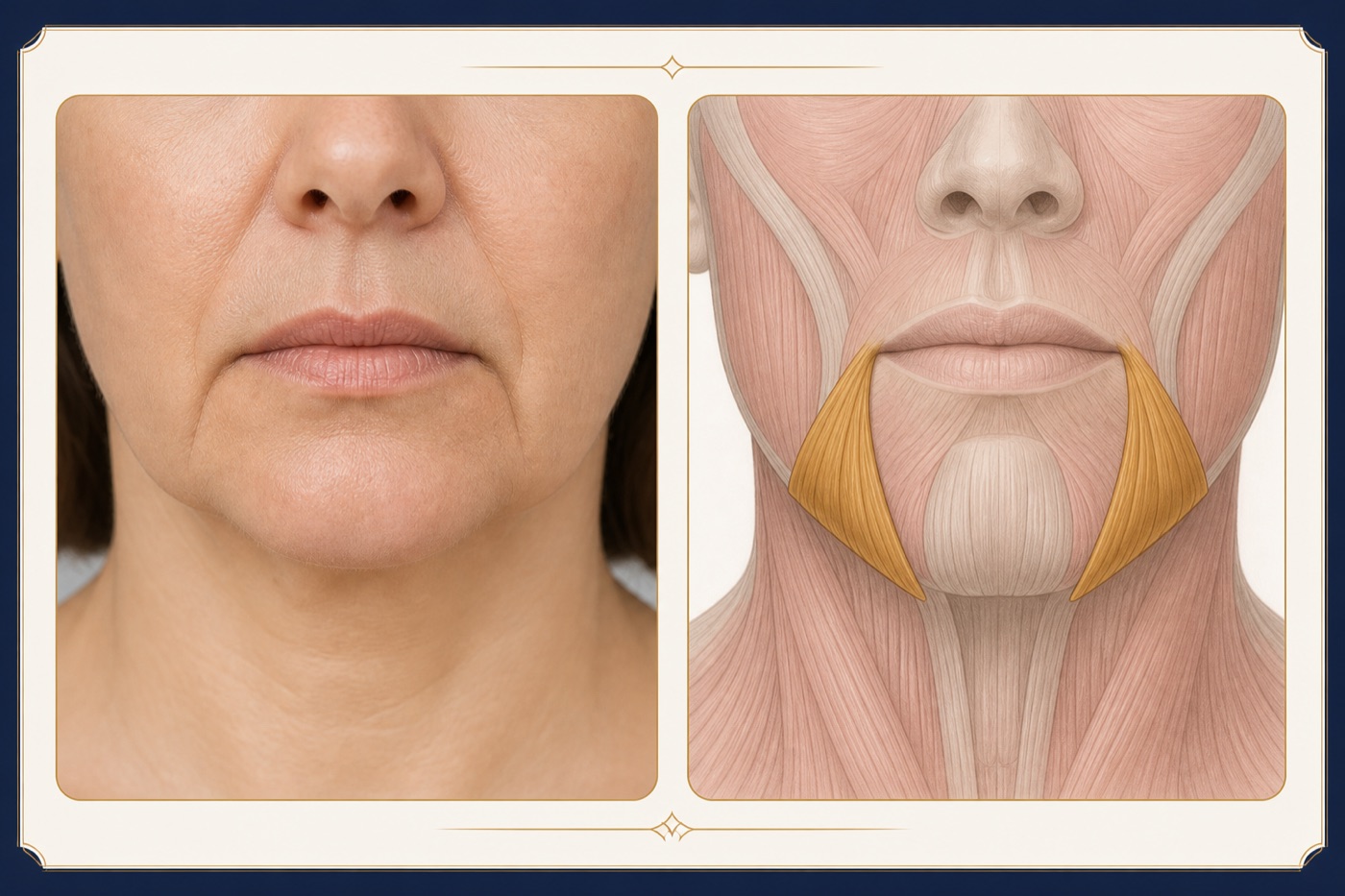
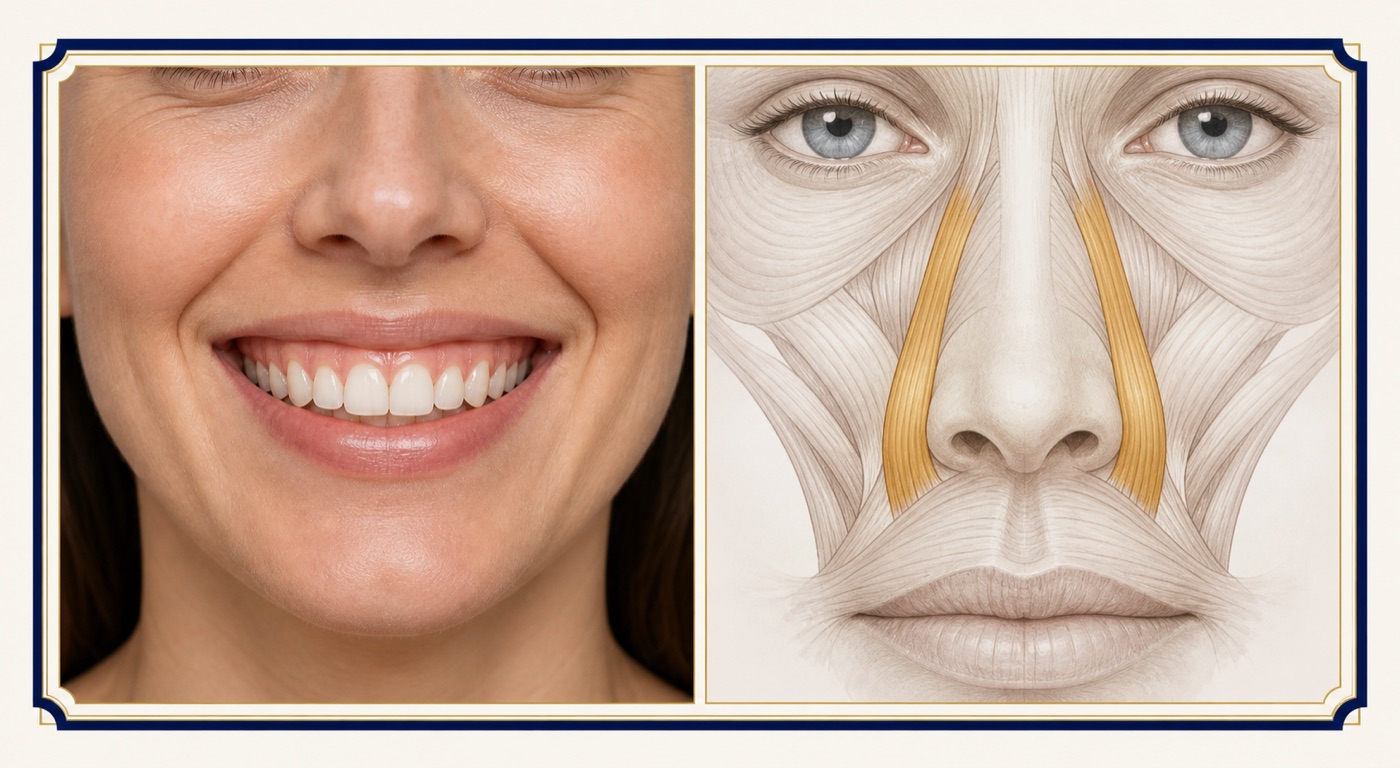
Effects are temporary, individual responses vary and no result can be guaranteed. The images below are original educational illustrations—not before-and-after photographs.
Concerns assessed in consultation
Upper face
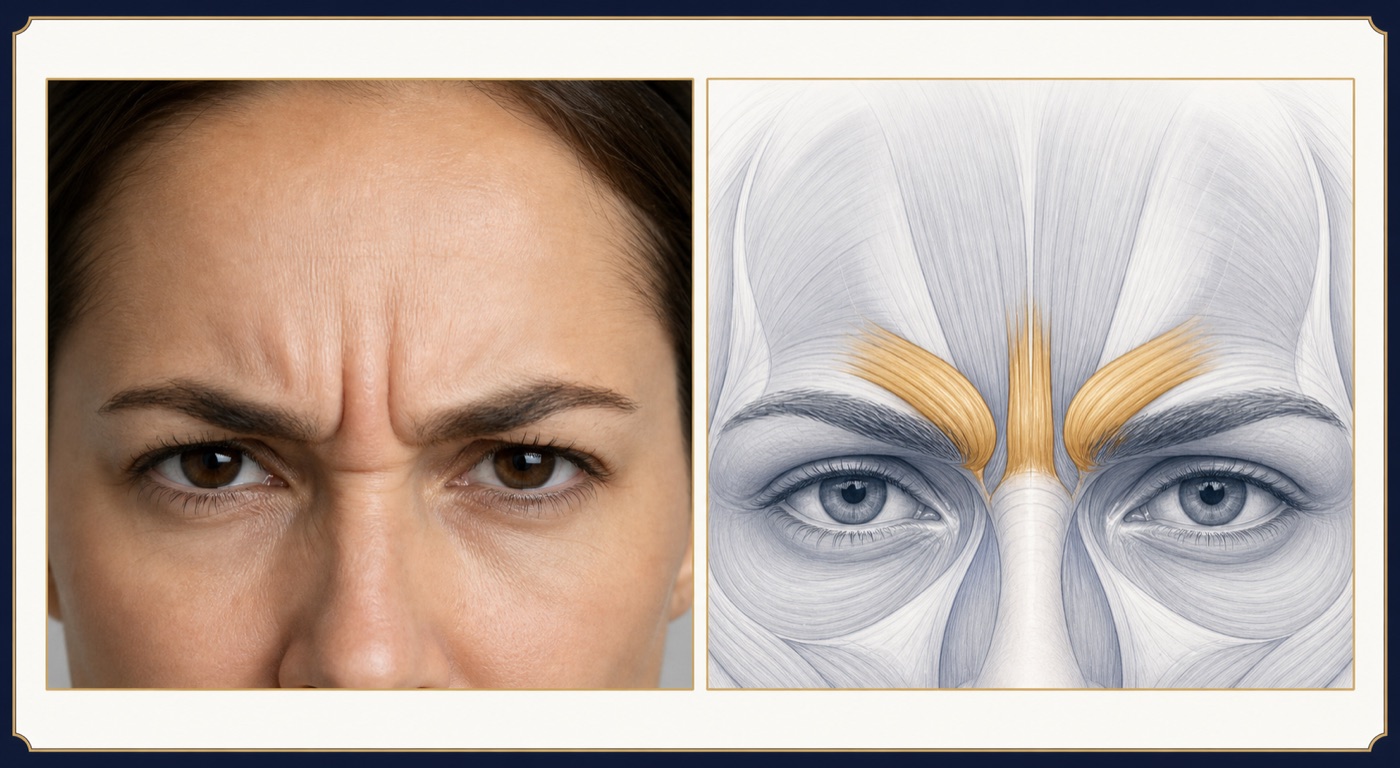
Frown lines
Corrugator supercilii and procerus
Frown lines sit between the eyebrows in an area called the glabella. Corrugator supercilii draws the brows inward and downward, while procerus pulls the skin over the bridge of the nose downward. Together, they create vertical and sometimes oblique lines when you frown.
Assessment includes brow and eyelid position, natural asymmetry, muscle strength and whether lines are visible at rest. Treatment may soften movement-related lines, but deeply etched lines may not disappear completely.
Upper face
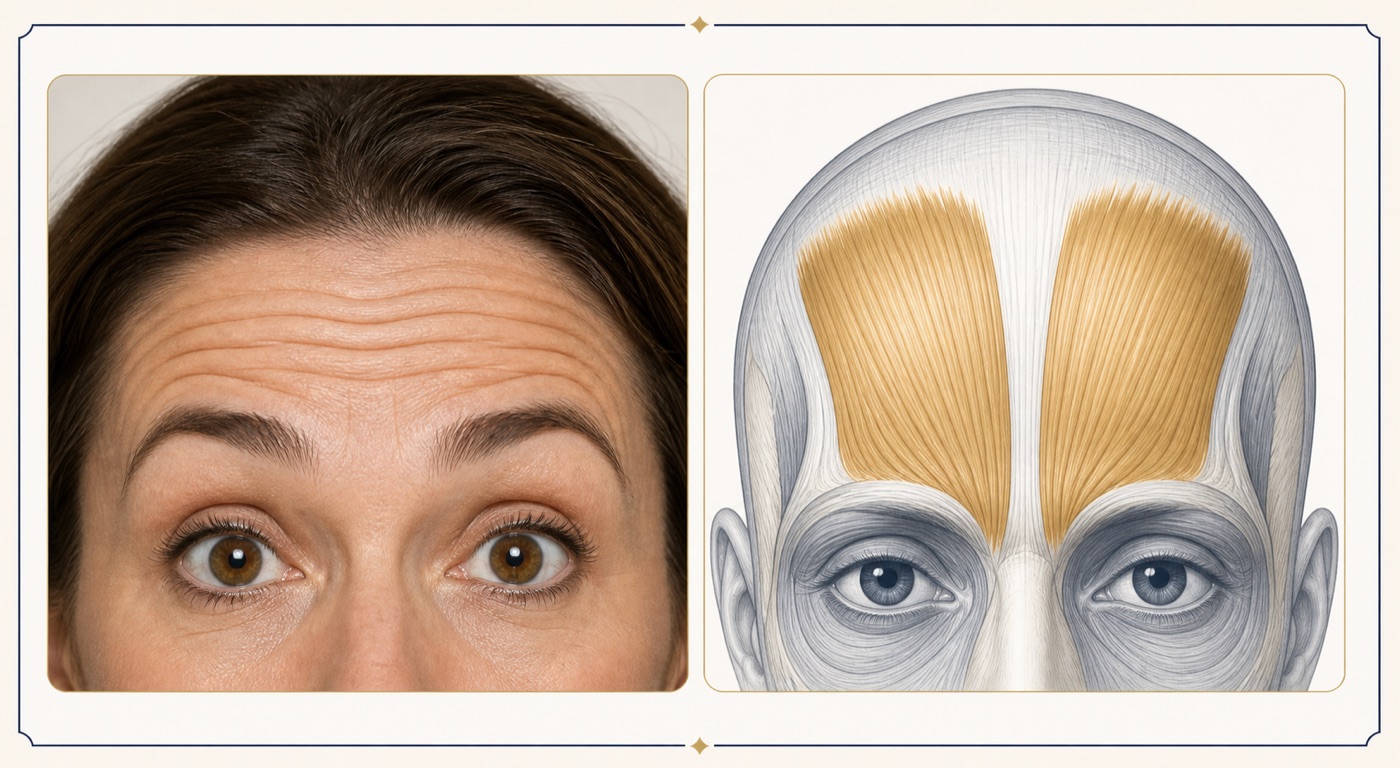
Forehead lines
Frontalis
Frontalis is the main muscle that raises the eyebrows. Repeated contraction creates horizontal forehead lines. Because this muscle also supports brow position, treating it without assessing the eyelids and brows can produce unwanted heaviness.
The forehead and frown complex must be considered together. The aim is to soften excessive movement while retaining useful expression and supporting a natural brow position.
Upper face
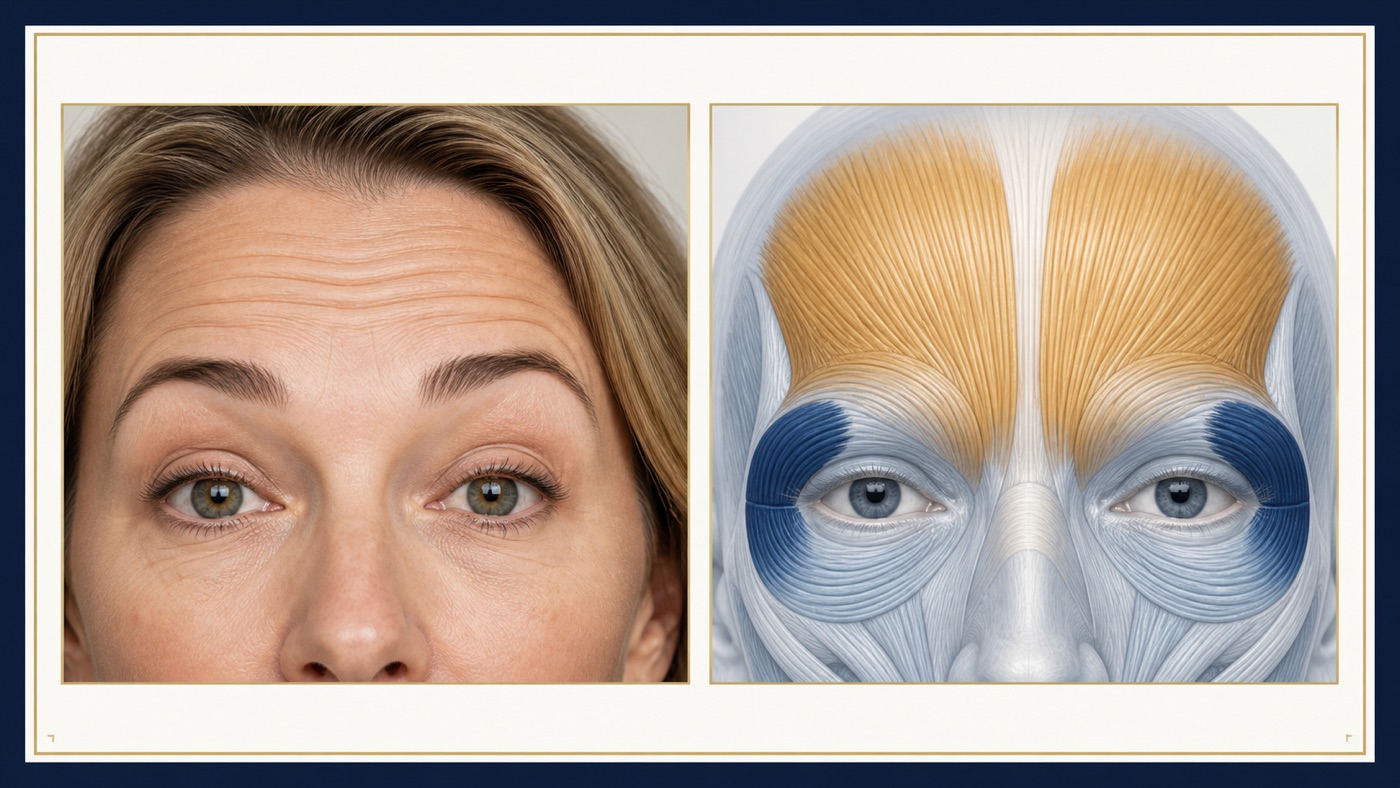
Brow position and asymmetry
Frontalis and orbicularis oculi
Brow position reflects a balance between frontalis lifting the brow and muscles that pull it down, including the outer part of orbicularis oculi. Small differences between the two sides are entirely normal.
A careful assessment considers eyelid hooding, brow shape and how both sides move. Small changes can alter expression, and perfect symmetry cannot be promised.
Neck
Platysmal bands
Platysma
Platysma is a thin, superficial sheet of muscle across the neck and lower face. When it contracts strongly, it can form visible vertical bands and contribute to downward pull around the lower face.
Not every neck concern is muscular: skin laxity, fat distribution and underlying anatomy also matter. Reducing platysmal activity may soften dynamic bands, but it is not equivalent to a surgical neck lift.
Lower face
Lines around the mouth
Orbicularis oris
Orbicularis oris encircles the mouth and helps to close and purse the lips. Repeated movement, together with changes in skin support over time, can contribute to vertical perioral lines.
Speech, drinking, eating and expression all depend on precise lip function, so conservative assessment is essential. Depending on the lines and skin quality, another approach—or no treatment—may be more appropriate.
Lower face
Marionette lines and downturned mouth corners
Depressor anguli oris
Depressor anguli oris pulls the corners of the mouth downward. However, marionette folds are also influenced by skin, facial support, fat distribution and bone structure.
When downward muscular pull is an important component, targeted treatment may help some people. It cannot replace lost structural support, so assessment must distinguish movement from other causes.
Smile
Gummy smile
Levator labii superioris alaeque nasi (LLSAN)
Levator labii superioris alaeque nasi helps raise the upper lip and the side of the nose. Together with other smile muscles, strong activity can contribute to greater exposure of the upper gum.
Teeth, gums, lip proportions and the individual smile pattern must all be considered. Any treatment needs to be subtle and balanced, and dental or orthodontic assessment may sometimes be more appropriate.
Lower face
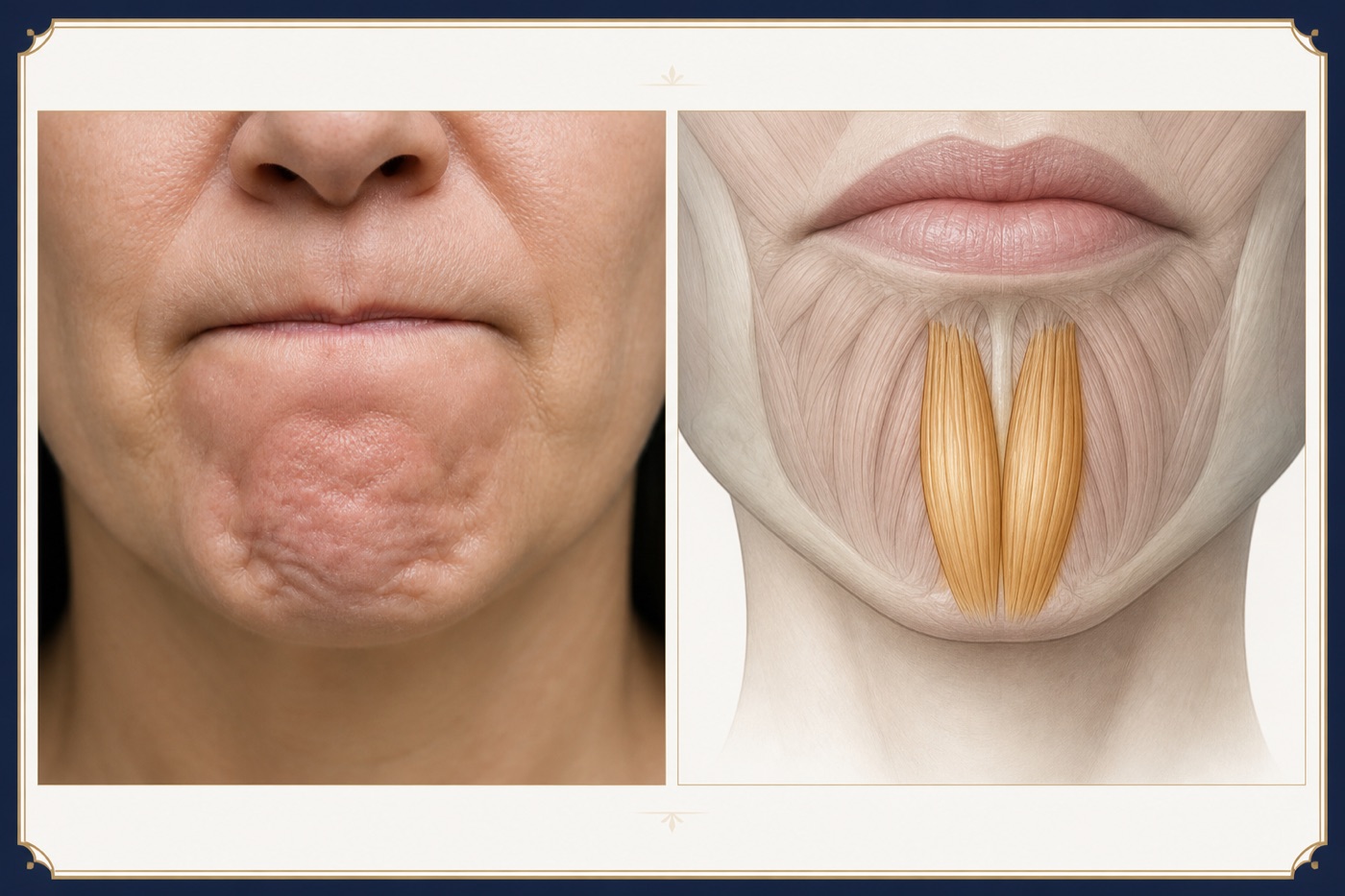
Dimpled or “cobblestone” chin
Mentalis
Mentalis raises and everts the lower lip and wrinkles the skin of the chin. Strong or persistent activity can create dimpling, a cobblestone appearance or a deeper crease below the lower lip.
Assessment also considers lower-lip function, dental and jaw structure and the neighbouring muscles. Careful placement is important to preserve natural expression and oral function.
Jaw
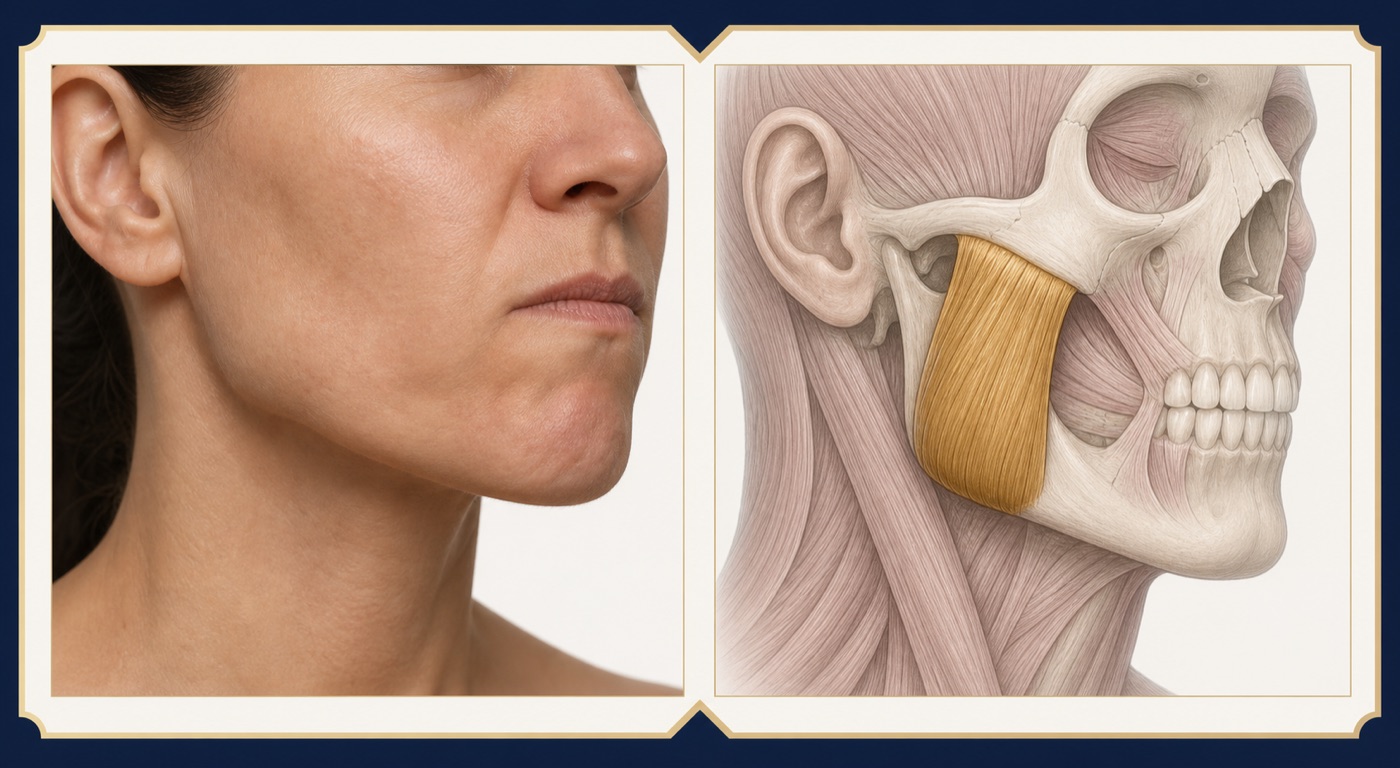
Teeth grinding and clenching (Bruxism)
Masseter
Masseter is a powerful jaw-closing muscle attached between the zygomatic arch and the outer surface of the mandible. Clenching and grinding may contribute to jaw discomfort, tooth wear, tension-type symptoms and prominence at the angle of the jaw.
Bruxism can have dental, sleep-related, medicine-related and stress-related causes. Medical and dental assessment may be required; treatment does not address every cause and does not replace dental protection when that is needed.
Perspiration
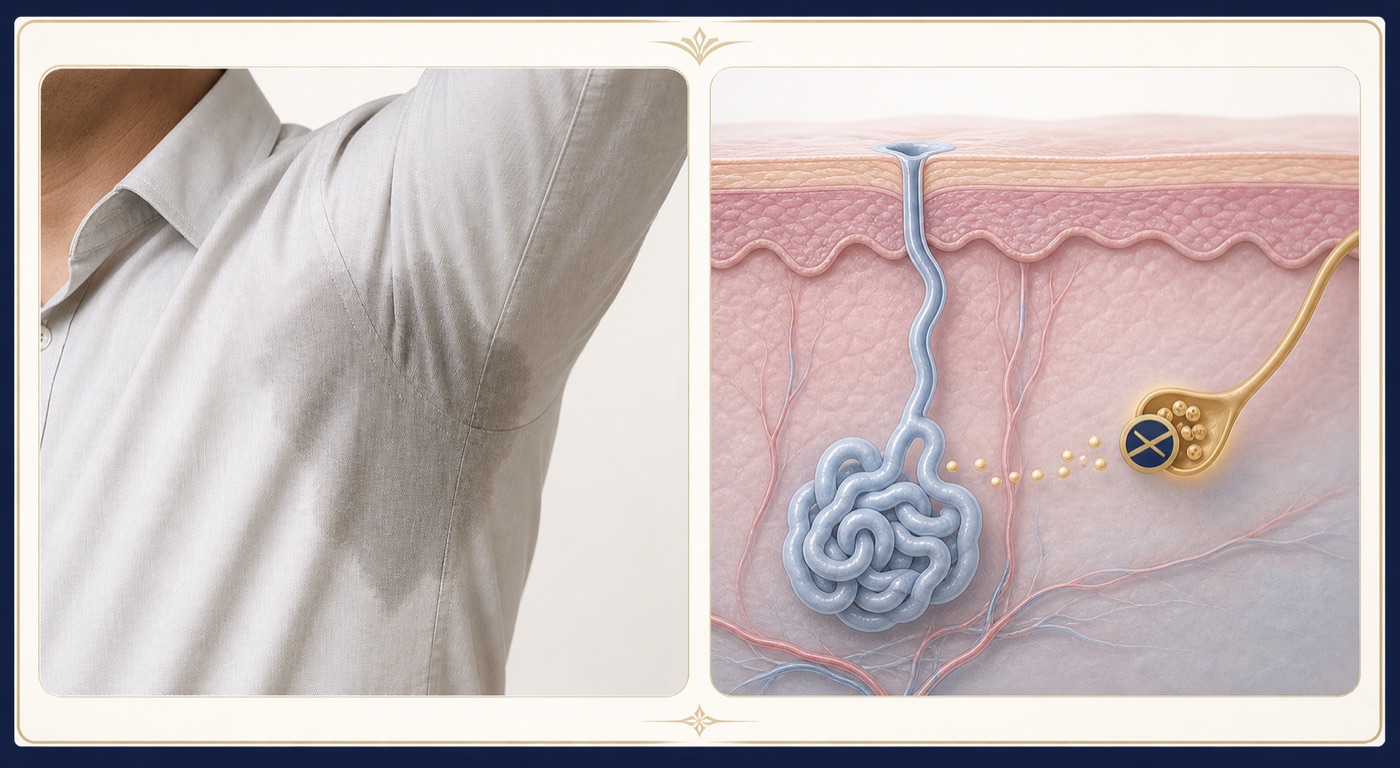
Excessive perspiration (Hyperhidrosis)
Eccrine sweat glands and cholinergic nerve endings
Eccrine glands produce sweat and are activated by acetylcholine released from sympathetic cholinergic nerve endings. Where clinically appropriate, treatment can temporarily reduce this signalling and decrease sweating in the treated area.
Assessment considers the affected area, severity, triggers, medicines and possible medical causes. Facial and underarm perspiration can be discussed; outcomes vary and normal sweating continues elsewhere.
Assessment comes first
Listing a concern does not mean that treatment will be suitable or recommended. Your consultation includes relevant medical history, examination at rest and during movement, a discussion of realistic options, alternatives, fees, consent and appropriate follow-up.
Discuss your concerns with Dr Rob Greig
View current appointments, prices, deposits and availability on the secure SimplyBook.me website.